BlackRock’s Bet on Tokenization: How Instruxi Has Already Built The Infrastructure Needed
Share
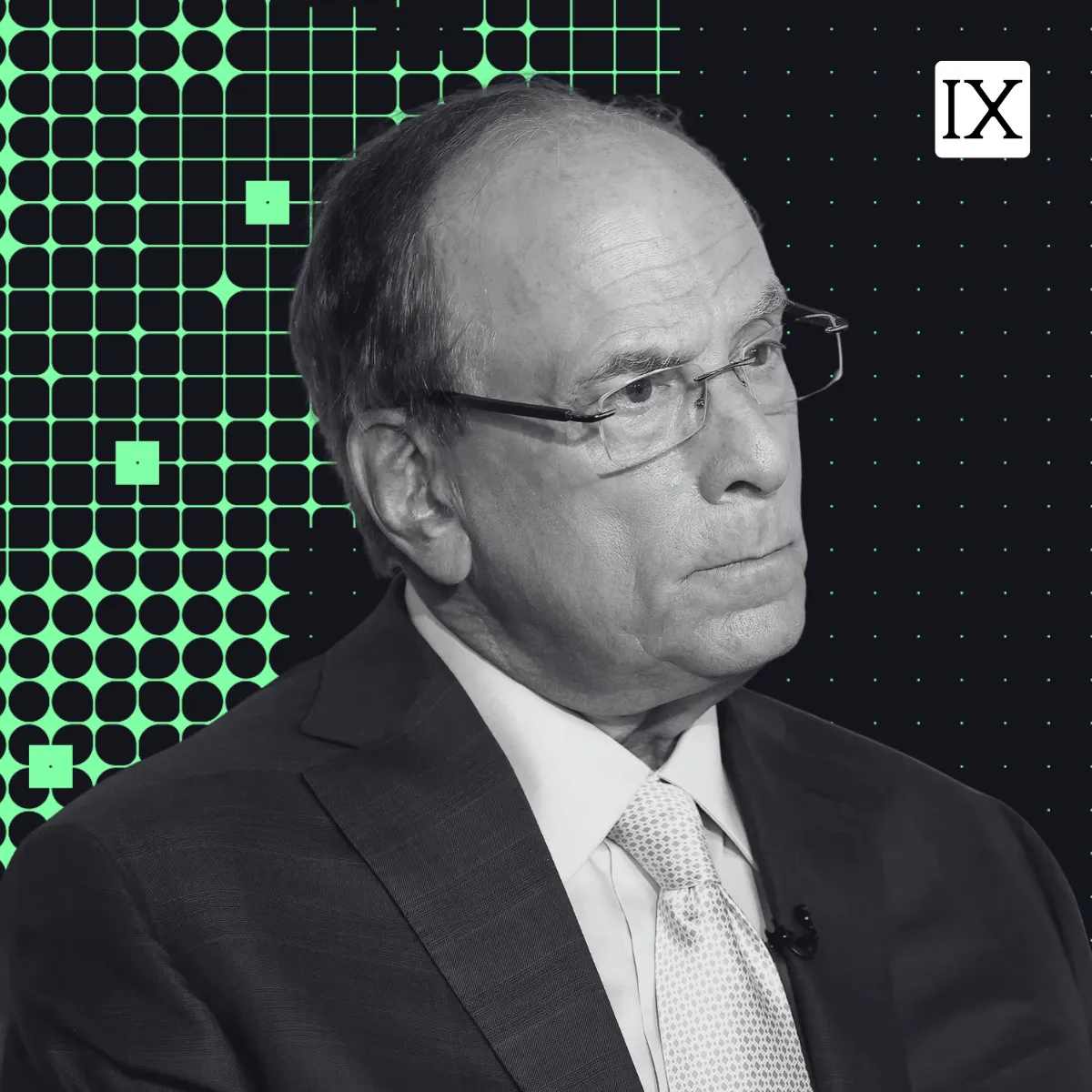
In his annual letter to shareholders, BlackRock CEO Larry Fink argued that tokenization and digital wallets could modernize the financial system, expand investor access, and update the plumbing of global markets. He called for clear rules on investor protections, counterparty risk, and digital identity. He compared where tokenization sits today to the internet in 1996.*
It is a compelling vision. And it points directly to the infrastructure layer that will determine whether that vision holds.
The Gap Fink Identified Is the Gap We Exist to Close
Fink’s letter centres on a structural problem that the financial system has not kept pace with the technology now available to it. Assets are still slow to move and identity checks are repeated and manual. Compliance continues to be a friction layer, not a design principle. Access remains gated by legacy architecture rather than genuine eligibility criteria.
At Instruxi, we built our platform around exactly this diagnosis. We are the control plane for institutional, permissioned blockchain applications. Our role is to connect existing Web2 systems, identity frameworks, audit trails, and workflows to Web3 execution environments, smart contracts, and on-chain settlement, without pushing sensitive data on-chain or requiring organisations to abandon operational control.
This is not a hypothetical roadmap, it is something that we already are deploying in client solutions.
Digital Identity Is Not a Feature. It Is the Foundation.
Fink specifically called out digital identity as a precondition for tokenization to scale safely. He is right. Without a governed, verifiable identity layer, tokenised assets cannot enforce compliance, cannot gate access appropriately, and cannot meet the audit standards institutional capital requires.
The Instruxi Enforcer addresses this directly. It works across traditional software and blockchain environments, confirming who someone is, determining what they are permitted to do, linking accounts to digital wallets, and enforcing rules at transaction speed. KYC and KYB checks, role-based access controls, and immutable records of every decision are built into the architecture, not added on top of it.
This is what automated compliance looks like in practice. It is the evolution from periodic, manual audit and review queues. The Enforcer is a governed, always-on identity and policy layer that operates the same way whether a transaction happens in a Web2 system or on-chain.
The Wallet Problem Nobody Talks About
Fink envisions half the world’s population using a digital wallet to access tokenized assets as easily as sending a payment. That future depends on solving a problem that rarely makes the headlines: who controls the keys, and what happens when something goes wrong?
Traditional crypto wallets place the full burden of key management on the user. The blockchain adage: Lose your private key, lose your assets. For institutional adoption at scale, that model is not viable. Enterprises need wallet infrastructure that is secure, recoverable, and compatible with existing access control frameworks.
This is where Multi-Party Computation comes in. MPC wallet architecture eliminates single points of failure in key management by distributing cryptographic signing across multiple parties, meaning no single device, server, or individual holds a complete private key at any point. The result is institutional-grade security without sacrificing the programmability that makes on-chain settlement valuable.
Instruxi has integrated MPC wallet capability as a managed service, currently through Privy, wrapping our API around key handling so that enterprises can deploy secure wallet infrastructure without building cryptographic systems from scratch. Critically, our architecture is designed to be provider-agnostic. As the MPC landscape matures, organizations using Instruxi are not locked into a single key management provider. The infrastructure adapts.
This is the layer Fink’s vision requires but does not name: a wallet infrastructure that enterprises can actually trust, operate, and govern.
Proof of Reserves Is Not Optional
One of Fink’s clearest points is that tokenized assets need to meet institutional standards for verification. The market cannot scale on periodic attestations and assumed backing. Institutions require machine-verifiable, continuous proof.
TrustSync delivers this. Using an oracle pattern with Chainlink, TrustSync continuously synchronises and proves key facts across distributed systems including balances, reserves, liabilities, and inventory states, replacing the uncertainty of monthly or quarterly audits with near real-time, cryptographic verification. The platform supports over 1,000 simultaneous reserve feeds.
Our I-ON Digital deployment is the clearest example of this at scale. $200 million of physical gold reserves were migrated into an on-chain collateral framework, with Instruxi’s TrustSync providing continuous proof of reserves via Chainlink. Daily attestation replaced manual audits. The tokenized gold now underpins the pmUSD stablecoin within the RAAC ecosystem and captures yield through on-chain liquidity venues. This is the kind of instrument Fink is describing: not a digital wrapper around an existing product, but a fundamentally new financial structure enabled by verified, programmable infrastructure.
The Bridge From Web2 to Web3 Has to Be Real
Fink is careful to note that tokenization will not replace traditional finance overnight. The path forward is a bridge, and it has to be built carefully and with institutional standards at every layer.
This has been our position since inception. Instruxi is integration-first. We connect to existing enterprise systems including treasury management, AP, GL, AR, and inventory, rather than requiring organizations to rebuild their technology stack. uBuild, our low-code tokenization engine, enables enterprises to rapidly deploy compliant blockchain applications by augmenting what they already have, not replacing it.
The result is what we describe as technological continuity: institutions gain the efficiency of programmable settlement and tokenised assets while keeping the controls they need for security, compliance, and auditability.
The Infrastructure Is Ready
Fink is calling for the financial system to modernize. Regulators are clearing pathways. Institutional capital is committed. The question is no longer whether tokenization will happen. It is whether the infrastructure underpinning it will be fit for purpose.
Instruxi was built to answer that question. The governance layer, the identity framework, the verification infrastructure, the MPC wallet layer, and the Web2 integration capability are not aspirational. They are deployed, operational, and proven in regulated environments.
The world’s largest asset manager is betting billions that tokenization will transform finance. The infrastructure layer to match that ambition already exists at Instruxi.
Learn more at: instruxi.io
Braun, H. (2026, March 23). BlackRock is betting billions that tokenized funds will do for Wall Street what the internet did to mail. CoinDesk. https://www.coindesk.com/business/2026/03/23/blackrock-is-betting-billions-that-tokenized-funds-will-do-for-wall-street-what-the-internet-did-to-mail
Related content



Ready To Tokenize Your Assets?
Join our users who trust Instruxi for secure, seamless, and efficient tokenization and enterprise-grade web 3.0 technology. Start now and unlock the full potential of your physical & digital assets.